Packaging is the only seller that works 24 hours a day
but is it selling—or just taking up space?
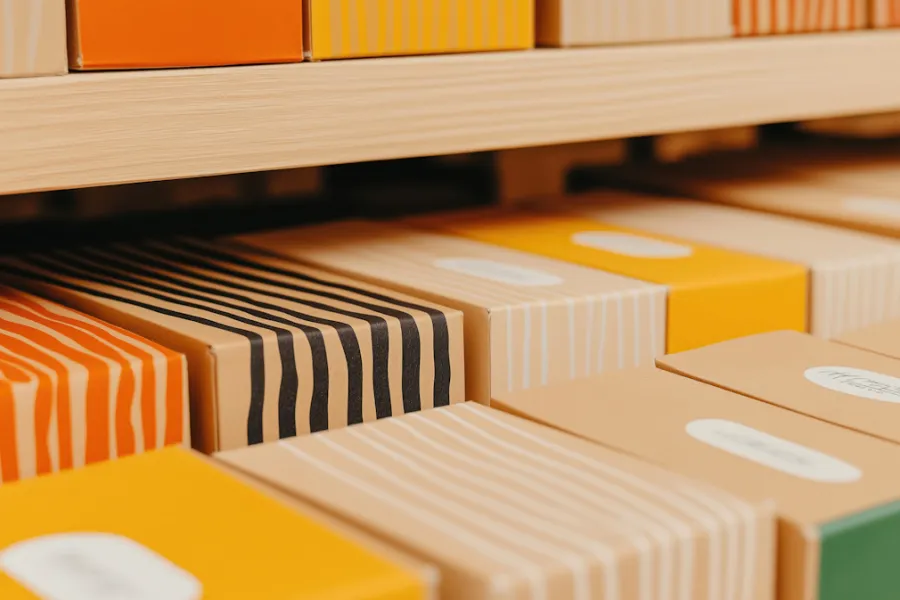
You have a sales team. You have a website. You’ve invested in one trade show, maybe two. But there’s a seller in your organization chart who works nonstop—no salary, no holidays. It sits on the shelf of an Esselunga supermarket, in a pharmacy on Corso Buenos Aires, on a display stand at the Salone del Mobile. It’s your packaging.
And it has three seconds to do its job.
Three seconds is the average time a consumer takes to decide whether a product deserves attention or whether their gaze slides to the competitor next to it. The most reliable estimates indicate that 60–70% of purchase decisions are made in front of the product, not beforehand. The numbers vary depending on studies and product categories—but the direction is clear: most of your customers don’t arrive at the shelf with a decision already made. They arrive with a vague intention and decide there, in that moment, guided by what they see.
If your packaging isn’t selling, it’s just taking up space. And shelf space has a cost—in rent, in margins, in missed opportunities. But here’s the problem: when an entrepreneur thinks about packaging, they think about box graphics. A bigger logo, a color that “pops,” maybe a glossy finish. That’s decoration. Packaging design is something else. It’s commercial strategy made physical.
Packaging design in Milan: brand strategy, not decoration
you don’t start from the logo. You start from the brief.
The difference between effective packaging and something that just takes up space is decided before any designer opens Illustrator. It’s decided in the brief — and a good brief is made of questions, not answers.
Who buys this product? Where do they encounter it for the first time—on a shelf, in ecommerce, at a trade show stand? What does it compete against? What price does it communicate before the customer even reads it?
A serious packaging design agency in Milan starts here. Market and shelf analysis, visual positioning against competitors, material research—which isn’t an aesthetic detail but a statement of value. Only after that—much later—comes the graphic concept.
“Box graphics” works the other way around. It takes the logo, applies it to a template, adds mandatory information, and delivers. It’s faster, cheaper—and it shows. You see it in products that don’t stand out. You see it in prices the market doesn’t recognize. You see it in margins that don’t improve.
A structured packaging design project follows precise stages: strategic briefing, market and competitive shelf analysis, visual positioning, material and finishing study, concept and creative direction, prototyping and testing, final artwork for print. Each phase informs the next—skip one, and you’re building on weak foundations.
Because packaging doesn’t exist on its own. It’s the physical extension of brand identity — and must be designed within the same visual system. Packaging that doesn’t speak the same language as the website, social media, or trade show stand creates confusion. And a confused customer doesn’t buy.
Packaging design: the three levers that drive sales
recognizability, perceived value, consistency.
Shelf recognizability
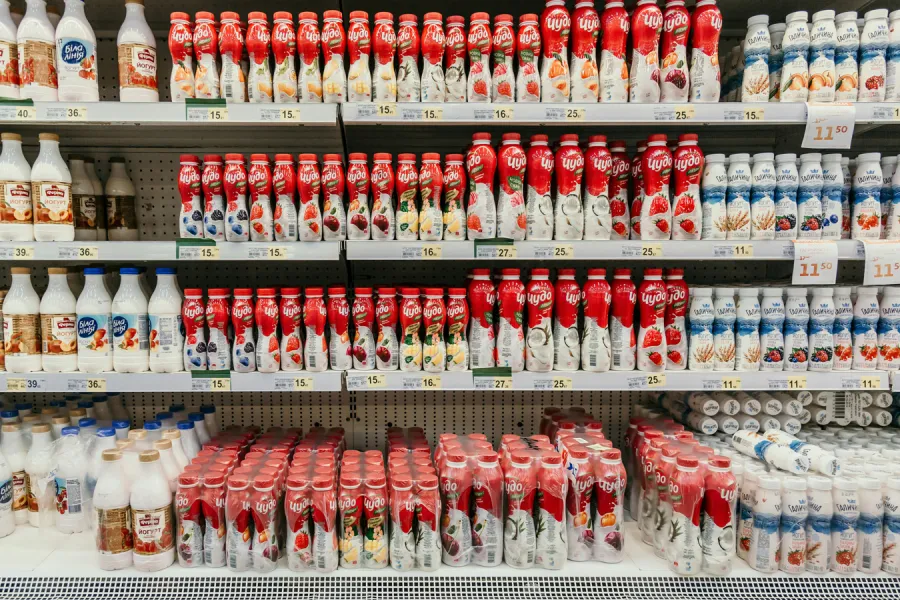
Packaging works when it’s identifiable from three meters away, among fifty competitors. You don’t need loud colors or aggressive graphics. You need a visual code — an element the brain registers before the eye even focuses.
Barilla has its blue. A blue so specific and consistent over time that it’s become synonymous with Italian pasta worldwide. Mulino Bianco has the mill—an icon that tells a story before you read a word. It’s not about budget. It’s about consistency and discipline over time.
A Milan-based natural cosmetics company, a Franciacorta winery, a Ligurian olive oil producer—each needs a different code, but the principle is the same: find the element that endures, and have the discipline not to change it every season.
Communicating value
Take a bottle of extra virgin olive oil. Same product, same cultivar, same mill. Bottled for a supermarket: generic label, plastic cap, anonymous box. Price: €6. The same oil with a designed label, dark glass bottle, aluminum screw cap, textured box: €18.
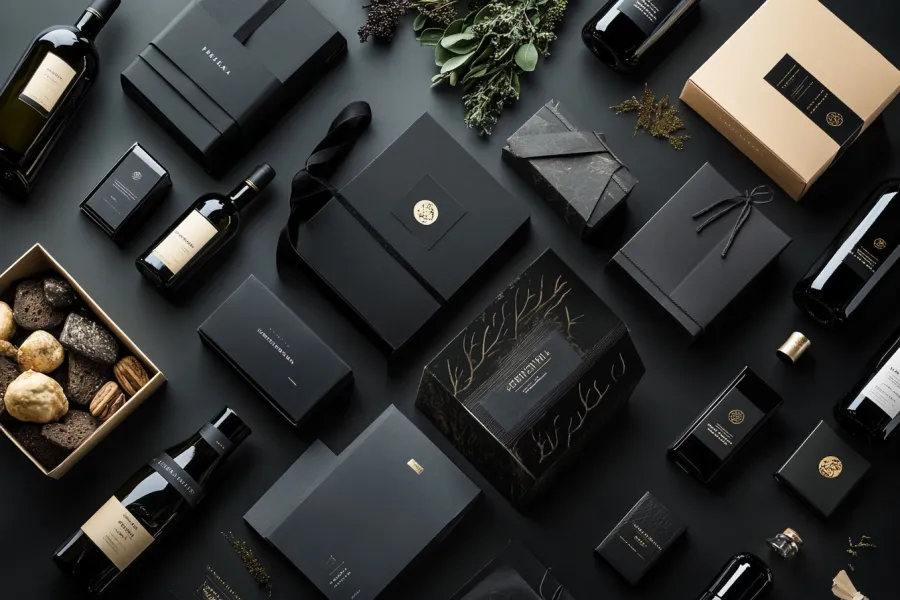
Three times the price. Same content. The difference is perception—and perception runs through packaging. Materials, finishes, typography communicate price before the customer reads it. If the packaging says “cheap,” no price list can contradict it.
Ecosystem consistency
Packaging isn’t an isolated object. It must work within a system: shelf, ecommerce, social media, trade shows, business cards. Premium packaging with an amateur website creates cognitive dissonance. A refined label arriving in a plain brown ecommerce box destroys the experience. That’s why packaging design can’t be delegated to a freelancer working on a single deliverable. It must be integrated into the overall communication — where every touchpoint tells the same story, at the same level.
Packaging in the Milan context: tradition and supply chain
where industrial design meets manufacturing.
Milan isn’t just any city for packaging design. It’s where design culture, production chain, and final market converge. The Salone del Mobile, Fuorisalone, and fashion weeks aren’t just events—they’re the ecosystem shaping the aesthetic sensitivity that ends up on shelves.
Working with a studio rooted in this district means access to a network of suppliers—printers, packaging manufacturers, finishing specialists—that simply doesn’t exist with the same density elsewhere. It means understanding accessible luxury — that space where a product isn’t mass-market but not unreachable either, where packaging makes the biggest difference.
Campari, Alessi, Armani didn’t happen by chance in Milan. They exist because the context made them possible. The same applies to packaging design: proximity to suppliers, manufacturers, and product culture is an operational advantage reflected in prototyping speed and final quality.
How much packaging design costs and how the process works
times, phases, and what to expect.
The question is fair: how much does packaging design cost? The honest answer is: it depends. But “it depends” isn’t evasive—it reflects project complexity. A single package for an established product has very different costs from a full line of six SKUs for a launch.
What can be stated clearly areo the phases and timelines.
Briefing and analysis — 1 week. Information gathering: physical product, price positioning, sales channel, regulatory constraints (legally required information), direct competitors. This phase requires active client collaboration—no one knows their market better than those who work in it every day.
Research and concept — 2-3 weeks. Study of the competitive shelf, analysis of category visual codes, definition of the creative direction. This is where the first proposals emerge—not just one, but two or three possible routes, each based on a different rationale.
Development and mockups — 2-3 weeks. The selected direction is developed in depth: choice of materials, finishes, and typography. A physical mockup is produced when possible—because packaging is judged in hand, not on a screen.
Revisions and finalization — 1-2. weeks. Refinement of the details: barcode readability, accuracy of legal information, and alignment with print specifications.
Final artwork and print supervision — Final production files with complete technical specifications. The studio supervises the first print run to ensure the printed result matches the design.
Printing and production are separate from design — the project fee does not include the print run, which the client manages with their own supplier or with printers recommended by the studio.
A full project typically takes 6-10 weeks from briefing to final files. Multi-product lines extend timelines but benefit from research efficiencies.
Packaging and ecommerce: designing for two shelves
physical and digital require different things.
A common mistake: designing packaging for physical shelves and using it unchanged for ecommerce. But the contexts are radically different.
On a physical shelf, packaging competes in three dimensions. Customers see it, touch it, turn it. Texture, weight, tactile feel matter. Online, packaging is a 400-pixel image. It must work as a thumbnail — legible when small, recognizable in grids, shareable on Instagram.
Then there’s the unboxing experience — the moment the customer opens the package. For ecommerce, it’s the first physical contact with the brand. A plain box with bubble wrap tells a very different story from packaging designed for that moment.
It doesn’t require huge investment. It requires conscious choices: branded tissue paper, a printed card, a closure that turns opening into a small ritual. Details that cost cents per unit but build perceived value and word-of-mouth.
Frequently asked questions
How much does packaging design cost?
The cost of a packaging design project depends on its complexity: number of SKUs, materials, finishes, and the need for physical mockups. For a single product, a full project—from briefing to print-ready final artwork—starts at a few thousand euros. For a multi-product line, the investment increases but benefits from economies of scale. Production and printing costs are always separate from design.
What’s the difference between packaging design and graphics?
Packaging design is a strategic process that starts with market analysis, positioning, and competitive research, and leads to a visual solution as the outcome of informed decisions. “Graphic design”—in the sense of applying a logo and colors to a predefined structure—is only the final step. Without the strategic groundwork, it is simply decoration.
How long does it take to design packaging?
A complete project typically takes 6–10 weeks: briefing and analysis (1 week), research and concept (2–3 weeks), development and mockups (2–3 weeks), revisions and finalization (1–2 weeks). For multi-product lines, timelines extend, but the research phase is amortized across different SKUs.
Does packaging design include material selection?
Yes. Material selection is an integral part of the process. Paper, cardboard, glass, plastic, aluminum: each material communicates something different and influences product perception. A packaging design studio recommends the most suitable materials based on positioning, sales channel, and production budget—working closely with printing and packaging suppliers.
Do you need different packaging for ecommerce?
Not necessarily different, but adapted. Ecommerce packaging must work as a thumbnail on product pages, be visually effective on social media, and deliver a coherent unboxing experience aligned with the brand. In some cases, it is enough to integrate the primary packaging with a designed secondary package; in others, a more comprehensive redesign is required.
Does a packaging design agency in Milan offer advantages over studios in other cities?
Milan concentrates Italy’s highest density of printers, packaging manufacturers, and finishing specialists. Working with a studio rooted in this ecosystem provides access to this network, as well as the benefit of an aesthetic sensitivity shaped by the city’s design culture—from the Salone del Mobile to fashion, publishing, and food.
Packaging works for you, even when you’re not there
Every product leaving your company carries a message. The question is whether that message was designed—or happened by chance.
At Lensky, we’ve been designing packaging for over 25 years. If your product deserves to be seen, touched, chosen, we can build the packaging that makes it happen.
Discover our approach to packaging design.
Or write to us: the first conversation is always commitment-free.